This post may contain affiliate links. Please read our disclosure for more information.

If having money to pay for your needs and wants is the only measure of your well-being, the coronavirus pandemic currently roiling the world’s economy has done nothing to damage me and Mrs. Groovy. That’s the beauty of financial independence. Not being dependent on a job, business, or government check for your livelihood leaves you remarkably well-positioned to ride out an economic storm.
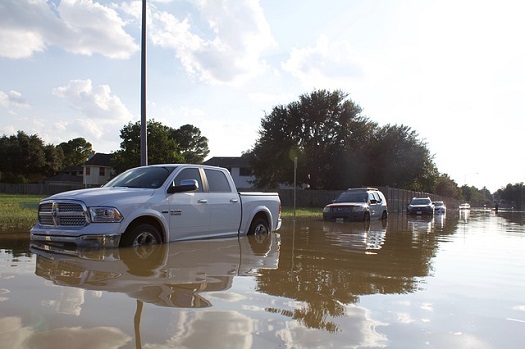
But what if things got really bad? What if our country suffered a Venezuelan-like collapse and supermarkets were stripped bare and basic services such as electricity and police protection were sporadically provided or nonexistent? How well-off would Mrs. Groovy and I be then?
The truth is that Mrs. Groovy and I would be screwed. We’re pretty much recession-proof, but we’re very far removed from being disaster- or collapse-proof.
The good news is that the coronavirus pandemic has made us painfully aware of this vulnerability. And because we’re financially independent and not scrambling to pay our bills, we have the luxury to step back, take stock of our most glaring shortcomings, and then rationally figure out how to address those shortcomings. Here’s our rational figuring as of today.
Three Levels of Security
The way we see it, there are three levels of security: recession-proof security, disaster-proof security, and collapse-proof security.
We define recession-proof security as not being dependent on anyone for our income. We got this covered and don’t see any need to change how we’re managing our spending or the portfolio that’s backstopping our spending.
We define disaster-proof security as recession-proof security plus not being dependent on anyone for food and basic services for one to three months. This is our most glaring shortcoming and I’ll explain how we’re going to address it shortly.
We define collapse-proof security as recession-proof security plus disaster-proof security plus not being dependent on anyone for food and basic services for the remainder of our lives. We’re ignoring this level of security because 1) it’s a major undertaking in terms of money and time, and 2) it’s not very likely to be needed.
Okay, with our security levels defined, here’s how we’ll be addressing disaster-proof security over the next year or so.
A Prepper Pantry
We got a lot to learn here. At first glance, it seems pretty easy. Just get a bunch of canned food, peanut butter, oatmeal, and powdered milk. But how much food and cooking supplies would we need for 30 days? And where should we locate our prepper pantry? And how often should we replace items in our prepper pantry?
The good news is that the internet is chock full of websites dedicated to prepping and there is no shortage of 30-day food lists for the prepping nubie. Here’s the rudimentary prepper pantry we’ll be putting together over the next several months.
- 10 2-liter bottles of flavored seltzer water
- 2 boxes of powdered milk
- A 20-lbs bag of rice
- A 20-lbs bag of beans
- 2 jars of honey
- 2 containers of oatmeal
- 10 boxes of pasta
- 30 cans of fruit
- 30 cans of vegetables
- 30 cans of meat
- 2 jars of both peanut butter and jelly
- 2 jars of coconut oil
- 2 bottles of olive oil
- 2 bottles of vitamins
The Groovy Garden
We got over three acres of land here at Groovy Ranch. Do you think it’s time we devoted a small portion of our land to growing our own food?
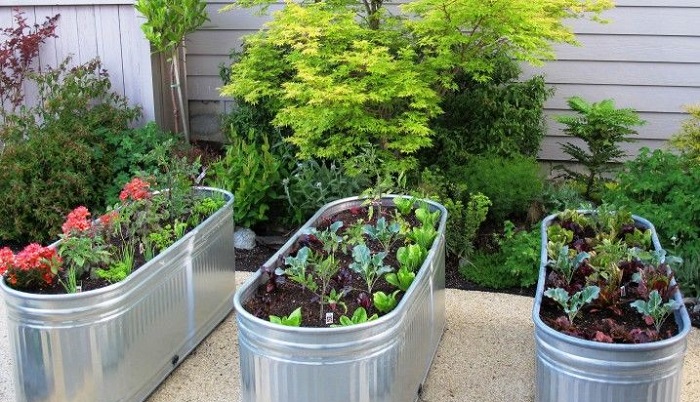
The problem is we don’t know what the hell we’re doing. So we’re going to start small—with some container gardening. We’re going to buy four or five feeding troughs (see below), and Mrs. Groovy’s going to select a handful of herbs and vegetables to grow. Right now she’s leaning toward basil, cilantro, oregano, tomatoes, zucchini, and cucumbers. We’ll see. I’m going to let her run with this one. I did come across a YouTube video the other day about growing potatoes in a five-gallon bucket and that’s going to be my baby.
DIY Protection
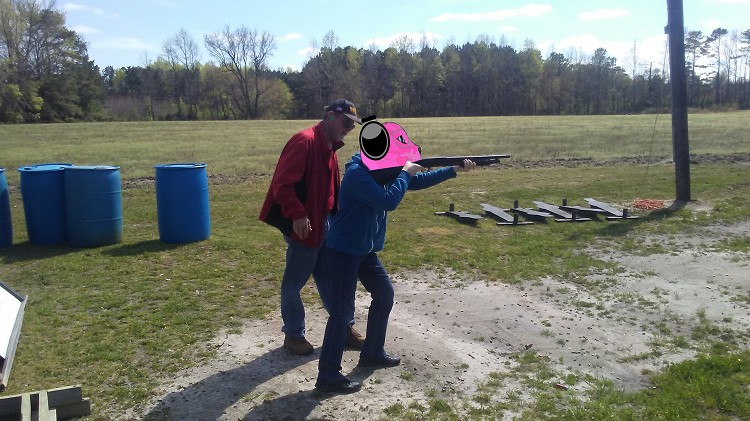
We’re in the middle of nowhere. We have far more cows for neighbors than humans. And even though we have a home security system and a competent county sheriff, we’re basically on our own. Good guys with guns are at least 15 minutes away. So even absent a disaster, it’s imperative that we become a little more self-reliant when it comes to self-defense. To that end, we purchased an entry-level home-defense shotgun. Below is a picture of Mrs. Groovy firing our Mossberg 500 during our first shotgun lesson. Once we get past the coronavirus crisis, we’ll get our concealed-handgun permits and a couple of handguns.
Whole-House Generator
We talked to our electrician and he said a whole-house generator would cost around $6,000. That’s a fairly steep price to pay for the rare electricity outage. (For the year and a half we’ve been living at Groovy Ranch, the electricity has gone out twice. Once for 20 minutes and another time for roughly eight hours.) But if a monster hurricane rolls through the Raleigh area one day, we’ll be ready. Besides, we’re not taking any vacations this year, so we might as well throw this year’s vacation budget at disaster security.
Final Thoughts
Okay, groovy freedomist, that’s all I got. What say you? I say financial independence gives you the luxury of addressing disaster-level security and this is another great reason why financial independence is something every American should strive for. Let me know what you think when you get a chance. Peace.


Leave a Reply to Mr. Groovy Cancel reply