This post may contain affiliate links. Please read our disclosure for more information.

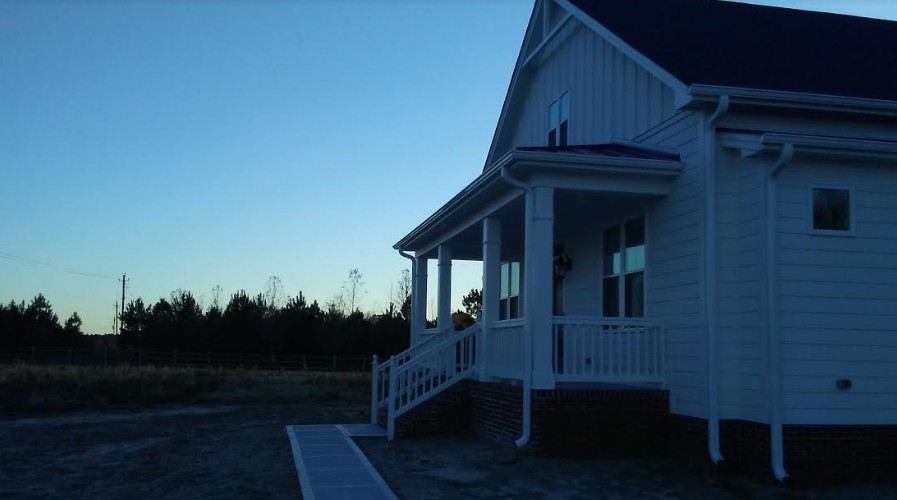
Groovy Ranch is now operational. In a little over five months, 3.4 acres of land went from accommodating winter wheat to accommodating a 1,528 square foot farmhouse and a 672 square foot garage.
We’ve been living in Groovy Ranch for a little over a week now. We don’t have any furniture yet—we’re still sitting on lawn chairs—but we love our new house. This is pretty much our dream home. And the only reason I hedge a little on branding Groovy Ranch our dream home is its location. If it were in Whitefish, Montana, overlooking the Rocky Mountains, it would unequivocably be our dream home.
With that said, I think it’s a good time to take stock of our first building experience—what we liked, what we didn’t, and what advice we would give to someone wanting to build a home. Here we go.
The Bad
Mrs. Groovy and I had a comical punch list when the build was over. Of the ten items we had, five pertained to caulking. Yes, the needed corrections were that piddly. The most egregious correction was replacing a spindle on the front porch railings. And even this was somewhat superfluous. A big knot on a spindle came dislodged and the edge of this spindle looked unsightly (at least to Mrs. Groovy’s eyes).
From the building perspective, there really wasn’t anything bad. Terry’s execution was near flawless. The only real screw up was committed by his exterior painters. They neglected to cover the fireplace vent before painting. Now we have a white fireplace vent rather than a silver fireplace vent. The horror. [Mrs. Groovy here: Terry called the painters on that screw up and they told him “this is how it’s done now.” Yeah right. Among the thousands of homes in our family’s community in Wake Forest, not one house has a painted fireplace vent. Well, at least it passed inspection. It might not have in another county.]
Design Faux Pas
On the design front there were just two things I wished I would have anticipated. Our hallway bathroom has two doors. One from the hallway and another from my bedroom. We did this because we wanted my bathroom to double as the guest bathroom. But because of the way the doors are situated, they open up into each other. It’s not the greatest design flaw one could be saddled with, but we will have to be vigilant about keeping both doors closed at all times. This will mitigate the number of future door smashes. [Mrs. Groovy here. You could simply keep the door from the hallway closed at all times unless we have visitors.]
The second design-related flaw I wish I would have anticipated also pertains to the hallway bathroom. The light switches for the bathroom are conveniently located by the door to my bedroom. There are no light switches by the hallway door, and this will be confusing for guests. A guest will naturally look for switches right by the door. Not finding switches in a natural place could very well mar a guest’s bathroom experience. Aaarrrggghhh!
Ill-Chosen Wood Floors
On the finishes front, Mrs. Groovy and I really only have one minor disappointment. For the hardwood floors, we decided to go with red oak rather than white oak to save a little money. It turns out, however, that red oak has reddish accents—surprise, surprise—and these accents don’t work well with all stains. We love the way the floors came out. But if we went with white oak instead, the weathered oak stain we used would had left the floor with a gray hue—which is precisely what we wanted. Weathered oak stain on red oak, however, left the floor with a orange hue. Again, not the worst thing in the world. But if we ever build again, we’ll make sure to use white oak. [We didn’t do enough homework on flooring. But I don’t see an orange hue on our floors. I just see floors that came out lighter than we anticipated. As much as I wanted the more weathered look, I think we lucked out here. The lighter floors really bring out the gray in the cabinets.]
Groovy Downsize Challenge
Way back in February of 2016, I came up with the downsize challenge. The goal was to move up to the the Wake Forest area, build a smaller house, and use the difference between what our Charlotte house sold for and the cost of building our new house to fund travel to Australia, Ecuador, and Thailand.
Well, we moved to the Wake Forest area and built a house that was 500 square feet smaller than our Charlotte house. So far so good. But the cost of Groovy Ranch was way more than the proceeds from our Charlotte house sale.
Groovy Ranch cost roughly $293,000 to build (that includes the cost of land as well). The proceeds from our Charlotte house sale were roughly $235,000. This means the result of our downsize challenge was -$58,000.
It’s safe to say that our downsize challenge was a colossal failure.
The Good
Oh, man, where do I begin? This build was more stress free than I ever could have imagined. In fact, it was so stress free, Mrs. Groovy and I tossed the fight-o-meter soon after the build began. We simply had nothing to fight about. (By the way, the final tally for the fight-o-meter was 8 wins, 3 losses, and 1 draw. A clear thrashing by Mrs. Groovy.)

Trust
Before we signed the contract with Terry, we asked him if he wanted to see our bank account. After all, he wasn’t asking for a down payment, and we thought he might want to make sure we had the money to build Groovy Ranch before he started working on it. But Terry said no. He trusted us. In fact, he didn’t ask for his first draw until the framing was complete—close to two months after the build had begun.
Trust went the other way as well. We had a good feeling about Terry from the start, and nothing during the build ever gave us a reason to question that initial assessment. Terry did what he said he was going to do, and Terry did it when he said he was going to do it. He was the consummate professional.
Price
Terry said the house and garage we wanted would cost $253,500, and that’s what it would have cost if we—and I stress we—hadn’t made any upgrades. There were no surprises. Groovy Ranch ended up costing $5,286 more than the contract price because we wanted a better quartz countertop for the kitchen, a vented rather than a ventless fireplace, a larger garage, gutters, and cement walkways.
Hands-On
Terry, his GC son Cam, and his lead carpenter Brian were on the job site practically every day. And if they weren’t supervising the subs and inspecting the quality of the building materials, they were building Groovy Ranch. I can’t tell you how comforting it was to pull up to the job site and see Terry, Cam, and Brian hammering and sawing away. It made communication between us and Terry remarkably easy and remarkably effective. Terry had ample opportunities to educate us on the building process. And we had ample opportunities to ask questions and relay concerns.
Quality
Terry is definitely an old-school builder. His building contract was just a few pages long and only cataloged the general finishes and features we desired—hardwood floors, tiled showers, quartz countertops, 16-seer heat pump, conditioned crawlspace, etc. In other words, the building contract was very short on specifics, and Terry had plenty of opportunities to go cheap. But he never did.
Here are just some of the instances in which he chose the more costly alternative:
- All interior trim was wood, not MDF.
- Exterior railings were wood, not PVC.
- Rather than using standard roof sheathing, Terry used a roof sheathing with a built-in radiant barrier.
- We only specified to Terry that we wanted a 16-seer heat pump. Terry, therefore, could have chosen a low-end brand such as Aire-Flo, DiamondAir, or Goodman. He installed a high-end Trane instead.
- Rather than using foam board insulation in the crawlspace, Terry used closed-cell spray foam.
- All the cabinet doors came with soft-close hinges, and all the cabinet drawers came with full-extension, soft-close slides.
- The bedroom doors and the pocket door between the kitchen and the utility room were solid rather than hollow. This really helped mitigate noise penetration in those parts of the house where outside noise was least welcome.
- We only told Terry we wanted a garage that was 24 feet by 28 feet. We gave him no other specifics than that. So he had free reign to build a basic garage. But that’s not Terry’s style. Our garage came with a metal roof, Hardie plank siding, nine-foot walls, three windows, an automatic garage-door opener, five four-foot lights, and a hundred amps of power.
Subs
Can’t say enough about Terry’s subs. Every one of his subs was professional and considerate. Not one got annoyed or bothered when we asked our stupid layperson questions. And they were all super accommodating—especially Marvin the plumber, Skeet the electrician, and Daniel the interior painter. Whenever we asked for something, they made it happen. Case in point. We got a six-foot down rod for our family room ceiling fan and that turned out to be too long. So we asked Skeet to replace it and told him we would supply the four-foot rod. Skeet, in turn, told us not to bother. He simply took down the rod, cut two feet off of it, and reassembled the ceiling fan.
Requests
Mrs. Groovy and I didn’t throw a lot of curve balls at Terry and his subs. But whenever we did, Terry and his subs hit them out of the ball park—and without any additional charges to our bill. The biggest curve ball by far was the cathedral ceilings on the kitchen side of the house. The plans called for a vaulted ceiling and Mrs. Groovy and I felt a cathedral ceiling would make more of a statement. Moreover, with a cathedral ceiling, we would be able to add some really cool rafter ties.
When we presented Terry with this request, he merely looked at the plans for a minute or so and said “no problem.” After that, the only thing we had to do was decide on the number of rafter ties. We chose six and the rest is history. The cathedral ceiling and the rafter ties are now my favorite parts of the house.
Quick aside. My, my, my, how age changes a man’s perspective. When I was a young man, girls, beer, and sports got me going. Now, as I’m rapidly approaching 60, comfortable shoes, Dairy Queen, and rafter ties get me going. Is that pathetic, or what?
Louisburg, NC
If you’re looking for bars, museums, and a lot of things to do, Louisburg isn’t the town for you.
If you’re looking for peace and quiet and lots of cows, Louisburg is where you belong.
Louisburg is a small farming community, about a half hour north of Wake Forest. According to Google, it has a population of 3,359. I guess Mrs. Groovy and I make it 3,361.
We’ve only being living in Louisburg for a couple of weeks now, and we love it. There’s just something about small-town America that we find compelling. Maybe it has to do with age. Mrs. Groovy and I are far removed from our bar-hopping days. A wild Saturday night for us is having a mini Blizzard at the Dairy Queen. (And, yes, Louisburg does have a Dairy Queen.) Or maybe it has to do with Mrs. Groovy and I growing up in Brooklyn and Long Island, respectively. Perhaps we’ve had our fill of noise, traffic, and rudeness. Whatever it is, the quiet, the lack of bustle, and the everybody-knows-everybody-Peyton-Place aspect of Louisburg make us happy.
Here are some pictures of Louisburg that I hope convey its small-town charm.
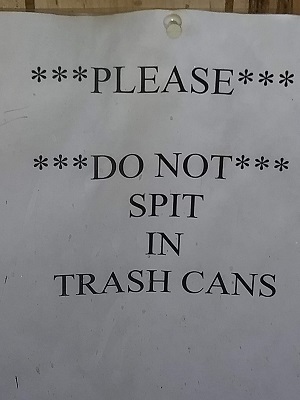
Mrs. Groovy spotted the below sign when we went to the gas vendor to pay our propane bill. Country folk in North Carolina don’t smoke nearly as much as they used to. But they still chew tobacco.
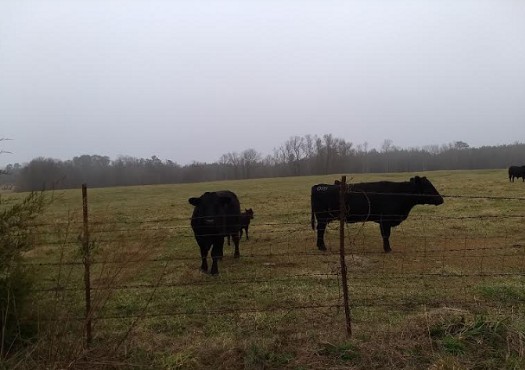
Here are some four-legged neighbors from just down the road.
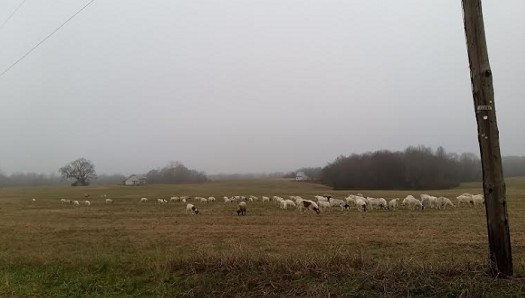
Here are some more four-legged neighbors from just a little farther down the road.
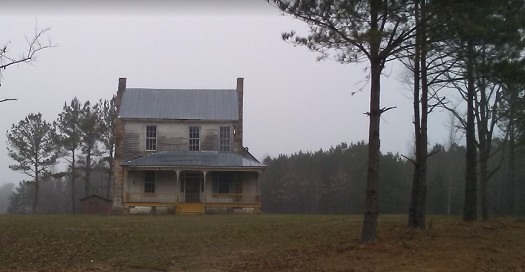
And if you go still farther down the road, you’ll find plenty of old farmhouses. Here’s one for sale. Now, if we could contract Chip and Joanna to fix it up for us, we might buy it.
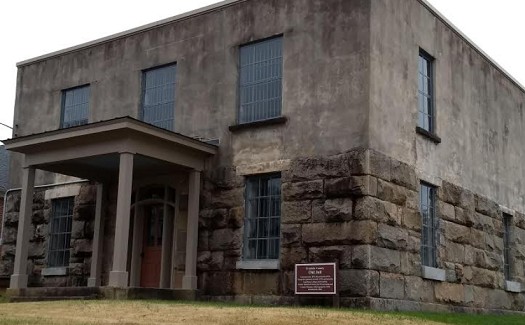
In downtown Louisburg you’ll find the old county jail. Wouldn’t it make a great AirBnB?
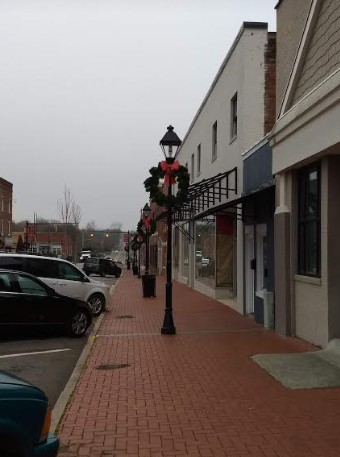
Downtown Louisburg hasn’t completely recovered from the Great Recession. It still has a number of empty store fronts. But downtown Louisburg has great bones and looks to be on the upswing. Two new restaurants are opening up in early 2019.

Compared to Wake Forest, Louisburg is a little lacking when it comes to greenways. In fact, it doesn’t have any greenways at all. But it does have a 1.5 mile hiking trail in Joyner Park. Check out the picture below from the trail. This stretch looked very squatchy to me.

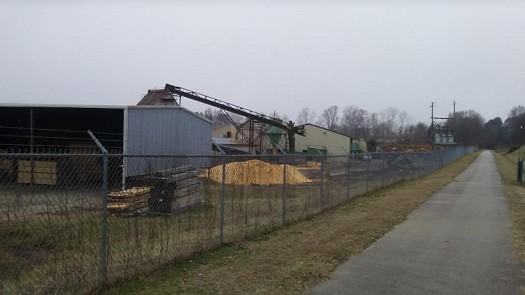
And Louisburg has a decent bike path that goes for 2.5 miles. Here’s a stretch of the bike path that passes a lumber mill.
[Mrs. Groovy here. Louisburg ain’t for everyone, but we really love its rural, small-town vibe. Initially, when we decided to leave Charlotte, we wanted to settle in Wake Forest. But Wake Forest is no longer a sleepy little town. It’s burgeoning with people, everywhere you look another building or apartment complex is going up, and the traffic is getting out of hand. Wake Forest actually has bumper to bumper rush hour traffic now. Mr. Groovy and I figure we got a good ten years in Louisburg before things start feeling crowded.]
The Key to Having a Great Build
Mrs. Groovy and I had a wonderful building experience. The only real angst we had was over the design of Groovy Ranch. Once that was settled, things couldn’t have went smoother. And the reason for that is simple.
It’s all about the builder, baby. Choose the right one and your building experience will be a joy. Choose the wrong one and your building experience will land on most if not all of Dante’s nine circles of hell.
We chose the right builder.
If I had to describe Terry with a pithy moniker, I would describe him as a “how ’bout you” builder. “How ’bout you” is a country song from Eric Church, and in this song there’s a line that perfectly sums up Terry’s character.
“If I shake your hand, look you in the eye you can bet your ass, it’s gonna be the truth”
At the time we picked Terry, we were pretty confident that he was a “how ’bout you” builder. The ensuing build certainly proved that to be the case. Let’s now turn to the process of weeding out Terry from his competitors.
Finding a Great Builder
Okay, we won the building game because we had an amazing builder. But here’s the sixty-four thousand dollar question: How the heck does one find a great builder?
Do Your Homework
Well, the first thing you do is your homework. Here is the due diligence that Mrs. Groovy and I performed before we chose Terry.
Get Familiar with the Reputable Builders in Your Area
Our first objective was to find six to eight reputable builders who wanted to build Groovy Ranch. Here’s how we found those builders.
Check with the local builders association
This is a great way to discover the key builders in your area. Mrs. Groovy first became aware of Terry via this search option.
Check with the local building supply company
Rustic Building Supply Company is a classic good ol’ boy gathering place in Louisburg. Whenever I go there I see Rustic employees talking tools, materials, and building strategies with both professionals and laypeople alike. I swear it reminds me of Sam Drucker’s country store on Green Acres. Anyway, we asked the good ol’ boys of Rustic for builders they respected and they recommended several—two of which eventually made it to our bidding process, Terry and R&R Building.
Ask the people who handled your land purchase
Any realtor worth his or her salt knows decent builders. And so do real estate lawyers, land surveyors, and soil engineers. So we asked our realtors (Kaye and Jerry) and our soil engineer (Sarah) for recommendations. We got two builders from Kaye and Jerry and one builder from Sarah. Oddly enough, we only asked Sarah for a recommendation because we met her at our property one day to get her soil report. And wouldn’t you know it, the builder she recommended (Chuck) ended up making it to our bidding process.
Ask Three Builders to Submit Bids
After finding eight reputable builders and conducting eight informal interviews, mostly on the phone, we selected three builders for the bidding process. Why three? Good question. Part of the reason had to do with necessity. Two of the builders were based in Raleigh, and they would only consider building in Louisburg for a premium. In other words, choosing either one of them would have entailed paying an “inconvenient travel fee” on top of the normal house-building charges. But the main reason had to do with manageability. We didn’t think we had the bandwidth to 1) make sure six builders had their bids in by a certain date, and 2) do a proper analysis of six separate bids. Three bids seemed to strike a proper balance between the need to get the best price and the need to live in harmony with your spouse.
Oh, I have one more thing to keep in mind when culling your builders for the bidding process. We decided to be proximity-centric when choosing our builders. Why? Well, being students of human nature, we assumed that builders based in Louisburg would be more familiar with the concerns and priorities of the Building Department inspectors and the building of Groovy Ranch would go a lot smoother. So two of the builders we picked for the bid process were based in Louisburg (Terry and R&R), and the other builder we picked was based in the neighboring town of Youngsville (Chuck).
[Mrs. Groovy here. Our proximity-centric approach to culling builders for our bidding process appears to have been a wise decision. We eventually chose Terry to build our house—a Louisburg-based builder—and we didn’t have a single problem with the Building Department. Our build went remarkably smooth.]
Prepare a Spec Sheet so All Builders Are Bidding on the Same House
I ain’t gonna lie. Preparing a spec sheet for the bidding process is a giant pain in the ass. But it has to be done. If you don’t do it, you’ll have one builder submitting a bid based on Joe Schmoe windows and another builder submitting a bid based on Andersen windows. In order to compare apples to apples, you have to make sure your builders are all bidding on the same products, finishes, and materials. And this is where a spec sheet comes in. It forces each builder to submit a bid based on the home you want, not the home he or she thinks you want.
If you want to look at the spec sheet I created for Groovy Ranch, I included a download button below. I created it from a spec sheet template I found online. Where this template came from, I don’t remember. All I remember is that it was ridiculously detailed. I don’t think you need to tell the builder what nails you want him or her to use on the framing. So I removed most of the froth and kept the main components of a house.
After I formulated my modified-spec sheet, I then went online and researched what a mid-level spec would be for each component on my spec sheet. In other words, I wanted Groovy Ranch to be better than an entry-level home but well below the quality of a high-end home. Oak hardwood floors from Bruce would be fine. I didn’t need Australian Cypress flooring from some boutique mill.
It took me nearly 40 hours over the course of a week to complete my modified-spec sheet. And, frankly, there’s no way I would have been able to put a spec sheet together if it weren’t for the internet. What the hell would I have done if my first foray into home building occurred 25 years ago? Put together a spec sheet with the aid of the Yellow Pages and a Baby Bell? Yikes! That would have been painful.
If you want to survive the spec sheet process, keep in mind the following:
- Don’t go nuts. You can find plenty of really good mid-level stuff at Home Depot and Lowe’s. Start all your searches at either one of these stores.
- Do more research and provide more specificity on the parts of the home that matter the most to you. I, for instance, wasn’t overly concerned with the quality of our hardwood floors. I was perfectly happy with a mid-level Bruce product. I was, however, more concerned about the quality of our kitchen cabinets. So I devoted much more of my time to formulating my cabinet specs than my flooring specs.
- If you can’t find an actual product for a particular spec, don’t sweat it. Just provide a description of what you’re looking for. Builders will know what products will do justice to your wants.
- Finally, never forget what the spec sheet is for. It’s a tool to help you make a fair comparison of the bids you receive. It’s very unlikely that half the specs you specify will actually make it into your completed house. I had Bruce pre-finished oak flooring in my spec sheet. All the builders submitted a bid price based on that particular flooring. But when it came time to actually build Groovy Ranch, and we were looking for ways to cut costs, Terry said he could save us money by installing unfinished wood floors and staining them on site.
Run from Any Builder Who Says He or She Can Do Kitchen Cabinets for Less than $25,000
To a layperson’s brain, a kitchen cabinet shouldn’t be very expensive. After all, it’s basically a box of wood. But a kitchen cabinet is more than just a box of wood, of course. It’s hinges, slides, drawers, doors, knobs, trim, stain, and joinery hardy enough to withstand years of yanking, slamming, and pawing. Good cabinets aren’t cheap. And neither is the labor needed to install them correctly.
Run from Any Builder Who Submits a Bid that Is Substantially Below the Price Per Square Foot in Your Area
Prior to giving specs to our builders and asking for bids, we asked our realtor and our designer what would be a reasonable per square foot price for a nice home with nice finishes. They said a per square foot price between $115 and $125 would be reasonable. So that per square foot price range was our benchmark. If any builder came back with a per square foot price substantially below that benchmark, we would have discarded him with extreme prejudice. Fortunately, none of our builders submitted a bid with a ridiculously low per square foot price.
Ask to See the Homes Your Builders Are Currently Working On
All of our prospective builders were extremely proud of their work—and rightly so. Every house we toured, whether it was a starter home or a high-end dream home, looked great. There were absolutely no red flags. The work sites were orderly, the subs were diligently toiling away, and the workmanship—at least to our untutored eyes—looked superb.
Watch YouTube to Get a Rudimentary Understanding of the Build Process and Pick the Brains of Your Prospective Builders
I watched one YouTube channel in particular—Matt Risinger. Matt is a high-end builder who focuses on green technology and the science of building homes. He has over 600 videos on his channel that cover every aspect of the build process from pouring concrete peers to installing standing-seam metal roofs. I binge watched his videos on the main parts of a home (crawlspace, framing, sheathing, roof systems, insulation, window installation, etc.), and then asked our builders about their building styles and philosophies. Happily, our builders didn’t stray very far from Matt’s best practices.
Consider Experience
Experience is a great teacher. So it makes sense to give it some weight. Terry had the most experience by far. He’s been building for three decades. R&R and Chuck are relatively new to the residential building game. Both had around five years of home building experience. But both R&R and Chuck had been in the building trades for much longer than that. R&R’s owners cut their teeth as carpenters for nearly two decades before making the entrepreneurial leap. And Chuck cut his teeth as an electrician for over a decade before making his entrepreneurial leap.
Google Your Prospective Builders
It never hurts to run a builder’s name through Google and see if any red flags come up. We did this on all three builders and all three passed with flying colors.
If in Doubt, Get References from Your Builders and Talk to Their Previous Clients
I guess this should be a standard practice, but Mrs. Groovy and I didn’t venture down this path. We would have if we couldn’t make a decision. In other words, we were going to use the opinions of previous clients as a tie-breaker. But it never came to that. After about a month of racking our brains and interviewing our prospective builders on numerous occasions, a clear winner emerged—Terry. And the thing that most tipped the contest in Terry’s favor was the following.
Listen to Your Gut
Anytime we asked a Louisburgian about builders, he or she invariably mentioned Terry. It was freakin’ uncanny. The most amusing instance of this phenomenon occurred while we were talking to a young lady at a metal garage company. She was maybe a year or two out of high school and in the middle of eating a Lunchable. Anyway, we casually asked her if she knew any builders and she replied, “Terry Gilliam built my mamma’s house and it came out great. You can’t go wrong with Terry.”
Now, it did cross my mind that the entire town of Louisburg was in on some giant Funny Farm-like scam. But what are the odds of a whole town being that conniving? And how much money does Terry have to pay off towns folk and bamboozle potential clients? No, we got the impression that Louisburgians were speaking from the heart when they heaped praise on Terry.
Quick aside. For those of you who aren’t familiar with the movie Funny Farm, Chevy Chase plays a writer who moves from the city to the country so he can write a novel. The town he moves to, however, is populated by a bunch of disagreeable misfits who make his life miserable. As a result, his novel and marriage crash and burn, and he has no choice but to leave. To leave, however, he must hoodwink a potential buyer into believing that the town is normal. So he bribes the townspeople into acting like the embodiment of Norman Rockwell’s America. Check out the clip below.
So what happened that finally tipped the scales in Terry’s favor?
Two things, the first being when we stopped by the home he was currently building. His son Jeremy was installing the kitchen cabinets when we arrived, and he took a break to give us a tour and answer any questions we might have.
When we were all done with the tour, and done with questions, Jeremy looked us in the eyes and said this:
“I’m not saying this because he’s my father, I’m saying it because he’s a great builder. If you let him build your house, you will not be disappointed.”
I didn’t say anything to Mrs. Groovy right away, but I believed Jeremy. I’m a pretty good judge of character, and he didn’t strike me as a bullshitter. It turns out that Mrs. Groovy felt the same way.
And the second thing that tipped things Terry’s way happened when we finally met with him to get his bid. He spent about a half hour going over the bid and suggesting ways to lower the cost without sacrificing quality. He then concluded his pitch, so to speak, by looking us in the eyes and saying the following:
“I want to build your home. And if you let me, I will build you a great home.”
Again, my gut said that Terry wasn’t a bullshitter. Happily, Mrs. Groovy felt the same (no need to give the fight-o-meter a workout), and within a few days we signed a contract with Terry so he could build Groovy Ranch.
Final Thoughts
Okay, groovy freedomist, that’s all I got. What say you? Are our thoughts on how to find a great builder worthwhile? Or did we rely too much on intuition and not enough on rational thought? Let me know what you think when you get a chance. Happy Hanukkah. Merry Christmas. Peace.


![[HCF] Avatar](https://secure.gravatar.com/avatar/ca84269332b223226d4c31cfddd7ffc3e5a46a66ec014ee0bbd84881baf0adfd?s=40&r=g)


Leave a Reply to Lily Cancel reply