This post may contain affiliate links. Please read our disclosure for more information.

I’ve always been a big fan of Dave Ramsey. His famous “baby-step” plan for improving one’s financial circumstances is really the only financial plan most Americans need. It’s the perfect recipe for shedding the paycheck-to-paycheck lifestyle and transforming oneself from a wealth-destroyer to a wealth-builder.
The one aspect of his financial mantra that I have always discarded, however, was his expected return on stock investments. Mr. Ramsey is fond of saying that any investor—even a well-manicured ape like you and me—should have no problem earning a 12 percent return on his or her stock portfolio. Just put your money in a “good growth stock mutual fund” and watch your investments grow.
I always regarded Mr. Ramsey’s 12 percent return as a pipe dream. I have no doubt that there are a number of portfolio managers who achieved a 12 percent return or better over a long period of time. But could a well-manicured ape like you and me find these elite managers and stick with them through their inevitable down years? I don’t think so. That’s why I have never used 12 percent returns when projecting long-term investment results. I always use a 7 percent return—a return well within the means of a broad-based stock index fund and therefore well within the reach of a well-manicured ape like you and me.
But then the other day I went online to Fidelity to check the performance of my investments. And below the returns for my Roth IRA, Mrs. Groovy’s Roth IRA, and our joint brokerage account were the returns for a number of common investment benchmarks.* Check ’em out:
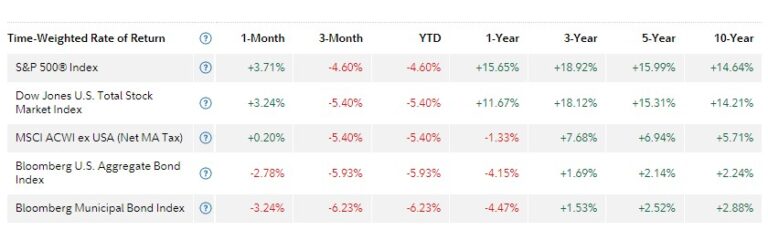
* Returns for the above benchmarks were as of 3/31/2022.
Well, it turns out that 12 percent returns aren’t a pipe dream. Anyone who invested in either a drab, no-nonsense S&P 500 index fund or a drab, non-nonsense total stock market index fund would have earned an annual average return of over 14 percent during the past 10 years.
So, yes, any well-manicured ape can earn 12 percent returns in the stock market. My apologies to Mr. Ramsey.


Leave a Reply to steve poling Cancel reply