This post may contain affiliate links. Please read our disclosure for more information.

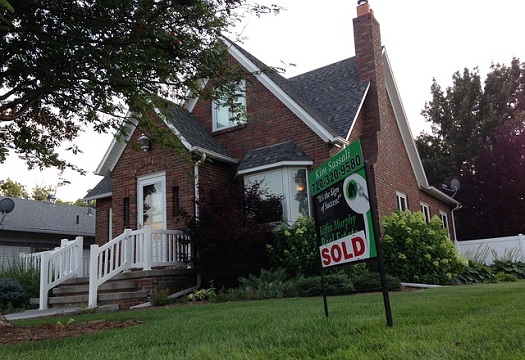
I don’t remember the reason why, but I recently looked up what it cost us to operate and maintain our house in 2016. Here are the results.
| Expense | Cost |
|---|---|
| Cleaning Supplies | $731.74 |
| Electric | $1,416.00 |
| Gas | $622.86 |
| HOA | $1,709.00 |
| HVAC | $186.92 |
| Improvements | $454.78 |
| Insurance | $610.08 |
| Internet | $870.75 |
| Maintenance | $137.53 |
| Other | $190.49 |
| Phone | $120.00 |
| Repairs | $28.77 |
| Taxes | $2,177.28 |
| Water | $559.87 |
| Total | $9,876.07 |
At $9,876.07, our housing costs amounted to 8.9% of our pretax income. Pretty neat. And that percentage would have been even less if Mrs. Groovy and I worked the whole year and didn’t retire in October.
Many financial experts advise people to keep their housing costs below 30% of their pretax incomes (see here, here, and here). And by housing costs, our financial experts aren’t including the things you need to properly operate and maintain a house (i.e., utilities, maintenance contracts, cleaning supplies, insurance, etc.). No, they’re just including the costs you need to make a bank or a landlord happy (i.e., mortgage or rent payments). But even with this very crude guideline for gauging housing affordability, many Americans are in over their heads. In fact, according to a 2014 study, over 21 million Americans are spending more than 30% of their pretax incomes on rent. Ouch!
So what’s our secret? Why are our housing costs so minuscule?
Simply put, our housing costs are low because we own our house outright. If we rented our house or had a mortgage on it, our housing costs would have been much higher (see table below).
| Status | Annual Base Costs | Annual Rent Payments | Annual Mortgage Payments | Total Annual Costs | Cost of Not Owning Your Home Outright |
|---|---|---|---|---|---|
| Owner | $9,876.07 | $0.00 | $0.00 | $9,876.07 | NA |
| Renter | $4,381.221 | $19,200.002 | $0.00 | $23,581.22 | $13,705.15 |
| Borrower | $9,876.07 | $0.00 | $13,656.003 | $23,532.07 | $13,656.00 |
2. In my neighborhood, homes rent for $1,600/mo and up. Yearly rent amount is based on $1,600/mo rent.
3. Yearly mortgage amount is based on what a $180,000 mortgage would have cost me in 2007. The interest rate on a 30-year mortgage back then was 6.5%.
It’s Not Owning Vs. Renting, It’s Owning Vs. Renting or Borrowing
The interesting thing I found during this exercise is that the cost of housing was basically the same for our hypothetical renter and borrower. Granted, each would have required a different amount of up-front money to secure my house. The renter around $3,200 (security deposit plus first month rent) and the borrower around $50,000 (20% down payment plus closing costs). But once in, both would have needed roughly $23,500 to cover all the associated costs with living in my house for a year.
So when you get down to it, the real debate when it comes to housing shouldn’t be owning vs. renting. It should be owning vs. renting or borrowing. Owning a house outright is much cheaper than being a renter or a borrower. In my particular case, owning my house is 58% cheaper than renting it or borrowing for it.
Here’s a nice axiom to remember. Rid yourself of rent or mortgage payments and suddenly your cost of living isn’t so costly. Things that you couldn’t address because there was never enough money—such as establishing an emergency fund and saving for retirement—suddenly become easy to address.
Five Ways to Become an Owner
Once Mrs. Groovy and I owned our house outright, we were 10 years away from financial independence. In once sense, that’s remarkable. But in another sense, it isn’t. Because we no longer had a mortgage, we were able to save roughly 60% of our gross household income every year beginning in 2007. And as Mr. Money Mustache has taught us, the math behind early retirement is rather straightforward. Save 60% or your gross household income and you’ll accumulate 25 times your annual expenses in around 10 years.
Think about that for a moment. Own your house outright and you are theoretically 10 years away from financial independence. Own your house at 30, and you can tell your boss to lump it at 40. Own your house at 40, and you can begin your RV life at 50. If that doesn’t get your FI juices flowing, I don’t know what will.
“Okay, okay,” I hear you bursting. “I got it. Own your house outright and you’re in a great position to make financial independence a reality. So how do I own my house outright?”
I’m glad you asked. Here are five tried and true ways of owning your house outright.
1. The old-fashioned way. Get a 30-year mortgage and make monthly payments for 30 years. Slow. Boring. Effective. But if you go this route, you may not be financially independent until you’re in your 70s.
2. The brute force way. Side-hustle your ass off to afford a 15-year mortgage or pay your 30-year mortgage off early. I had a co-worker do this when I was back on Long Island. He started a side-hustle landscaping business so he could afford a 15-year mortgage. Once the mortgage was paid off, he sold the landscaping business.
3. The geoarbitrage way. In 2006, Mrs. Groovy and I had a choice. We could stay on Long Island and purchase a decent house in a decent neighborhood for around $550K. Or we could move to Charlotte, North Carolina, and purchase a decent house in a decent neighborhood for around $225K. We chose the latter. And since we made $250K on our condo sale, moving to Charlotte made us instant owners. Had we chosen to remain on Long Island, we would have remained borrowers.
Geoarbitrage is a great way to turbocharge your quest for ownership. If you live in a costly metropolitan area (New York, San Francisco, Los Angeles, Boston, D.C., etc.), and you already have some home equity or a pretty sizable down payment, consider moving to a less costly metropolitan area (Dallas, Nashville, Charlotte, Omaha, Boise, etc.). Good housing is easily half the price, and property taxes are easily two-thirds less.
Side note: Our good friends Jim and Theresa just took advantage of geoarbitrage. They had over $100K saved up for a down payment. If they bought a house on Long Island, they would have had a mortgage of over $300K and property taxes in excess of $12K. Instead, they relocated to Wake Forest, North Carolina, and put 50% down on a beautiful home in a great neighborhood. They got a 15-year mortgage, which they’re already making extra payments on, and their property taxes are less than $3k.
4. The downsizing way. Just because the lenders, builders, and realtors say you need 1,000 sq ft for every member of your household doesn’t mean you do. When Mrs. Groovy and I first got married, we lived in a 600 sq ft condo and we were very happy. So if you want to own your house outright, and you can mentally handle a lack of space, consider going small. It’s a heck of a lot easier paying off a 600 sq ft condo than a 4,000 sq ft McMansion.
Side note: Two of our favorite bloggers, Claudia and Garrett, from Two Cup House, went the downsizing route. A couple of years ago they sold their 1,500 sq ft house and bought a 536 sq ft house. And largely because of this one ballsy move, they’re now completely debt free. And they’re in their early 30s! And they’ll be financially independent sometime in 2019! Yes, downsizing has its merits.
5. The screw conventionality way. Brother Groovy moved down to North Carolina a few years ago and did something he never would have considered in New York. He bought a trailer. The trailer cost him $20K and his housing costs—including lot fees, maintenance, utilities, and every other cost associated with operating and maintaining a trailer—are now less than $400 a month. Yes, living in a trailer doesn’t have nearly the cachet of living in a three-bedroom house with a white picket fence. But Brother Groovy’s trailer park is well maintained and his fellow trailerites are very nice. Moreover, because Brother Groovy’s housing costs are so small, he has more than enough money to fully fund his 401(k) and his Roth IRA.
Screwing conventionality is a great way to achieve home ownership rapidly. People with comfortable middle-class incomes, for instance, don’t normally dwell in trailers. But what if you’re starting all over and you’re in your early 50s? And what if you don’t want to work until you’re 75 years old? In situations like this, trailers are a godsend.
Side note. For our downsize challenge, Mrs. Groovy and I intend to get very unconventional. Rather than build a normal house, we want to build a Quonset hut. We can afford to build a normal house. But we think we can build a Quonset hut that is every bit as functional as a normal house for around $100K—including the price of land. And we would rather have another $100K to travel the world and really enjoy our retirement.
Final Thoughts
Okay, groovy freedomists, that’s all I got. What say you? Is owning your house outright the linchpin of financial independence? Or is this notion of mine for the birds? And if it is indeed the linchpin, should people consider doing something bold or weird to make it happen? Let me know what you think when you get a chance. I’d love to hear your thoughts. Peace.


Leave a Reply to Emily @ JohnJaneDoe Cancel reply