This post may contain affiliate links. Please read our disclosure for more information.

Hello, groovy freedomists! Today, we have a guest post from Maggie, the awesome blogger from Northern Expenditure.
Mrs. Groovy and I are big fans of Maggie. And before I tell you why, let me tell you a little about her.
Maggie lives in Anchorage, Alaska with her husband, 3 kids, and an occasional moose in the yard. She works part-time as a behavioral economics researcher and is working valiantly toward early retirement. And though she’s extremely enthusiastic about completing her FIRE journey, she understands the need to live life now. Maggie’s all about balance. She sees no reason why living for today and preparing for tomorrow have to be mutually exclusive. Oh, and here’s another important fact about Maggie: she loves everything made of chocolate and peanut butter.
So why do Mrs. Groovy and I love Maggie?
Let’s see. She has a moose in her blog logo. She sprinkles her posts with pictures of Alaska. But most of all, we love Maggie because she makes us think! Before we stumbled upon her blog, we didn’t know anything about temporal discounting, feature fatigue, and the marshmallow study. And her shirtless post is an epic way to exercise your mind muscles.
So without further adieu, here’s some more thinking material from Maggie. Enjoy.
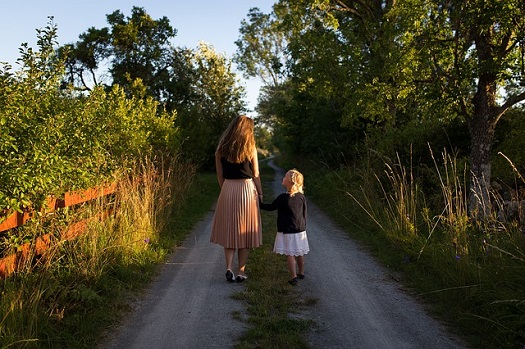
When you set out on a bike ride, you may get out elaborate maps, check for construction updates, and chart an exact path from beginning to end. Or, you may hop on your bike and start riding. There are benefits to both approaches. However, if you choose to just start riding, you may have a great ride, but you’ll never get anywhere.
Last December, I took an ice skating class at the university. On the first day of class, one girl in a thick Australian accent asked, “is this class actually going to go the whole time because I have a friend’s 18th birthday party tonight and it’s going to be awesome!” My old, graduated mom self said, “oh, kids!” I later found out that this “kid” was, in fact, in her thirties and older than me. I asked what she was studying and what brought her to Alaska. She said: “I don’t know what I’m studying. I went to university right after school, but I didn’t like it, so I dropped out. I tried working for awhile, but I never found a job I liked, so I decided to go back to school because it was more fun. I just randomly decided to do a semester in Alaska [from Australia] to go skiing, but I didn’t really plan ahead. I didn’t have any money when I came over, so I can’t afford a lift ticket.”
Pick a Path
This girl was in her thirties. She sounded like she had legitimately enjoyed her journey so far, but she also hadn’t gotten anywhere. She was still just riding around. She had no degree, no consistent job experience, no money in the bank, and no destination in mind. This may be an extreme example, but many of us are aimless. We’re just riding along to enjoy the ride. It’s easier to just hop on a bike and go, but do you know where you end up going? The path of least resistance. If you got on your bike right now and started riding around for fun, you would avoid the hills. We only go up the hills because we have a destination in mind. The same goes for our financial journey or the ultimate path of our life. If we just go along, we will only do the things that are easy. What keeps us from deciding a destination? The fact that once we pick where we’re going, we have to accept there will be hills for us to climb.
If you just start riding, you may end up going downhill, which is fun. But then you’re stuck at the bottom of somewhere and the only way to get back out is to ride up. At some point, all paths lead back uphill. When you arrive at this location from following the path of least resistance, these hills make you angry. “I didn’t plan for this. I just wanted a fun ride! These hills came out of nowhere.” This can debilitate us because we have to go up a hill, but we’ve never had to make a hard choice, so we don’t know which hill to climb. And it’s easy to stay at the bottom and just not move. When we choose a path and mark the hills we’ll face along the way, we are able to approach the hills with momentum and determination. “If I make it up this hill, I’ll be that much closer to my destination!” Yes, unexpected hills or obstacles can still occur on the path we’ve chosen, but getting past them is just part of the journey to the end goal instead of a complete blockade.
If you ascribe to the Hawaiian proverb: “The unaimed arrow never misses,” you’ll never experience a bulls-eye. Pick a path.
Make it YOUR Path
So now we agree that the girl in my ice skating class should pick a path. But I’m going to guess that she’s not looking at me (graduate degree, part-time job from home, married, 3 kids, living in Alaska) thinking, “I wish I lived that life.” Everyone’s ideal path is different, and that is good. We are individuals, so we should not all follow the same path.
The first thing that happens when we pick a path, is that we pick the most popular one. We throw ourselves into the herd and just start moving with them. This is the path society determines is the “right” path. Graduate from high school. Go to college. Get a job. Get married. Maybe have kids. Buy a house. Buy a bigger house. Get promoted. Earn a big title. Retire at 65. This path is not bad. Being on this path is better than being on no path at all. And maybe you have really examined the map and determined that this path is really the one you want to be on. If that is the case, excellent! You’ve found your path.
At some point, you need to be the one to pull out the map and look at all the options. Where do you want to be at 65? What do you want to have accomplished by then? If we place our destination time at 65 and fill in the path there, we’ll see which route hits the things we want to see before we get there. At 65, are you happy to be walking away from employment for the first time in 30+ years? Or do you wish you spent the last 20 of it traveling? Do you hope to have started your own business? Where is your family at? Did you do the things with them you hoped you would?
Mr. T and I started on this path and thought it was the right one for us. But we realized we weren’t pushing ourselves. The hills took a really long time to get over because we didn’t really care about the destination. We even picked out a bigger house and started saving up money to buy it, but it didn’t motivate us. We stagnated. Once we sat down and had a real conversation about what the most important things were in our lives and picked a path that led us to the destination WE picked, we were excited again and ready to tackle those hills head on.
If you don’t pick the path that excites you, the ride will be long and hard and you’ll struggle to enjoy it. If your destination isn’t enough to get you on that bike and pedaling hard every day, then you’re not on the right path.
It’s Okay to Change Paths
Never think that there is only one way to your destination or that you have to keep your original plans the entire way. The chances of that actually happening are very slim. You could realize one day that you don’t want to go where your path takes you. We did. And we quickly pulled the map back out and rerouted ourselves.
Maybe the path that seemed perfect is actually completely washed out and impassable. Life happens hard. Priorities can change. You are not forced to stay on any path. But make sure when you hit the “road closed” sign that you pull the map out and make other choices. Otherwise, you’ll find yourself back on the path of least resistance and you’re back to never ending up anywhere.
This journey is yours. You get to decide what’s important, where you want to end up, and which route you want to take to get there. But the first step in getting anywhere is deciding where it is YOU want to go. Make sure your path is the one that you decided and make sure that you’re being honest with yourself about if it’s really the one you want to take. If you’re not excited for the ride ahead, it’s time to recalculate the destination.
Making the choices you need and living with those choices is so important. My current FT work is contingency/project based and I’ve been doing it for different agencies since 2012. I’ve seen some of the same people make the same complaints about their careers in 2016 that they made in 2012. Many of them have not tried change their careers in any way. No applying for permanent work, no starting a business, no developing new skills, no nothing. It’s disheartening to see. They want something, but have not chosen to try any of the paths to get there.
Pick a path. Yes, please pick a path. It doesn’t matter which path you choose, but you have to actually look at your options and what you personally want, then you have to pick your own path.
Love the post Maggie! This is really an excellent read that can help a lot of us understand, there is no single path that fits us all, but there will always be a path for every one.
Thanks for adding to the conversation, TTW. To me the lesson is that we have as many chances as we want to get it right so we shouldn’t be so fearful of making choices.
Wow, just reading through these comments makes me realize what a wonderful path we’re all on together. A bit late to the party, I’ve been traveling quite a bit (read my London post on 11/15, please!!), getting caught up with my FIRE friends today.
This community is amazing. First, Maggie on with the Groovies, and then all of my “friends” jumping in with comments.
I love this path, wherever it may lead…..
Love this post, Maggie! I’ve changed paths a few times in my life and never, ever regretted it.
I like “start with the end in mind”. Know where you want to go and work backwards to figure out how you will get there.
I am with Ty on knowing “why” you are trying to get there – without the why it’s easy to get lost.
At one time in my life saving money was hard. But that was only because I didn’t have a reason to save. Once I realized that my dignity in retirement depended on saving, I had the why, and saving became incredibly easy.
Working backwards is always great. And I, too have changed paths many, many times (and anticipate I will change many, many more times).
I’m a huge (youuuuuge) fan of analogies and love yours! One thing I’ve found true in my own life is that sometimes just having a destination isn’t enough. Knowing WHY you are going there is equally important.
Agreed. Knowing the why is very important. Although, it’s not easy to figure out. But we need to strive for the why because it makes everything else fall into place.
Yup. I am a huge analogy person. The cheesier the better (this one is less cheesy that many, I assure you). And you’re right. The WHY is Very important!
This is so important–from life and carreer planning, to trip planning, even to grocery shopping–it is so much more productive and fulfilling if you have a plan and some goals. Even if they change, you still have the satisfaction and self-confidence that comes from seeing them through or making a conscious choice to change rather than blowing in the wind.
Often, stopping to explore other options can even reinforce your belief in and commitment to your original decisions.
Excellent points, Julie, especially about reinforcing your initial decisions. Some people find the right path early but that doesn’t mean they should remain closed off to alternatives.
Oh man. You’re preaching to the choir! I am a HUGE Planner! I change them A LOT as well, but I plan the heck out of anything that comes my way! (Want to see my 30-day meal menu?)
I might mass forward this to a few unnamed people in my life. Pick a path. Create some momentum. It’s easy to spin our wheels, but we don’t gain traction. It’s hard for me when I see so much greatness in people I love, so much potential. I just want that potential to come to fruition in their lives!
I know many people who are expert at spinning their wheels, too. Sometimes it’s painful watching people with such potential just meander. I hope you have better results with getting your friends to change. We’ve tried subtlety and it hasn’t even come close to working. And we don’t feel comfortable being forceful.
Mass forwarding… we should all try that. I wonder what friend responses would be. “Wait a minute… isn’t that YOU?” uh…. “Pick a path. That was the point. Focus on that.”
Great post!
I can totally relate to this Australian chick!! I floundered around quite a bit in my younger years. Bouncing from job to job trying to make something fit. Then I stumbled upon the Grateful Dead and took my floundering on the road…until the band’s leader Jerry died. Who knows where I would be if that hadn’t happened! But it did. And I am happy to say I wound up in a job that truly fits me. A lifestyle that fits me. To be fair, I didn’t seek it out. Someone suggested I be a flight attendant so I went for it. Thankfully, my company found something employable in my 23 year old self and 15 years later I’m still bouncing around the country…this time getting paid.
Point is, I had so many things I wanted to be that I was paralyzed to choose just one. The point you’ve made, that you can always change your path, is one that I didn’t understand until much later. After having done it so many times now, changing paths is normal to me. I am excited by new adventures and not paralyzed by them and all the “what ifs” that come when you choose one path in favor of another.
“What a long strange trip it’s been.” I often joke with Mrs. Groovy about how different our lives have become in the past 15 years. I ask her if she ever imagined she’d marry some Long Island boy, move to North Carolina, and retire in her 50s. So you never imagined you’d be a flight attendant but you rolled with it and turned it into something special. I love it! Thanks for sharing, Miss Mazuma.
A lot of people don’t understand the possibility of changing paths. Also, I need to hear more about this entire Grateful Dead past.
We sometimes think our path has been pretty normal only to pause and reflect that it’s far from normal. We upped and left the U.K. 18 hrs ago, came to the US and started a life together. Family, friends left behind and the big unknown of what lay ahead for us.
Fast forward and we are married, two healthy boys and on the cusp of starting another adventure by exiting the workplace and launching into more uncharted territory. Although 18 years older, we still feel those pangs of kiddie excitement of a fabulous trip about to start. Another new path lies ahead but the kids on it have not really changed that much.
You forged a great path Mr. Pie. How awesome is it that you still have that wide-eyed excitement you had 18 years ago. I can’t wait to see what you do when you exit the workplace.
Your excitement is contagious! I am so excited to see where my path goes and I love seeing all the different paths in this community!
I love this post! The bike riding analogy is great; we definitely know people in our lives who are just riding aimlessly and generally having a good time — but like you said, it doesn’t appear to be leading anywhere fulfilling long-term. My own path has changed many times even just in the last decade, but I’ve always tried to be intentional about it — and we don’t just change paths on a whim.
I was certainly aimless. Once I married Mrs G she introduced me to Dave Ramsey’s ideas and then I finally had some focus. It’s amazing what you can do when you get clarity.
Thanks Matt! I also very much like to leave the possibilities open. I will plan very carefully down one path, but if another one opens up along the way, I reserve the right to change directions, as you said. That’s how we roll with the early retirement thing. We’re still so early in our journey, so many other paths could happen along the way, but that doesn’t mean we should just cruise along or stop and wait for the paths to come to us.
Awesome post Maggie – great to see you guest posting on another favorite blog of mine!
We definitely left our driveway and followed the big “normal” pack. It never felt natural and then after a few years, I read The 4-hour Workweek by Tim Ferriss. While we didn’t change everything right then, it at least let me see the amazing paths that others were taking out there and to start dreaming up our own.
A few years later, I stumbled on Mr. Money Moustache’s blog and things started moving a whole lot faster. I feel really blessed to have connected with so many amazing people forging their own paths – it is a huge inspiration.
Thanks Maggie and Mr. & Mrs. Groovy for being some of those inspiring people!
Hey Chris, funny but I found Mr. Money Mustache first and then later, Tim Ferriss. I thought I was working until I was 67 before I started reading MMM. Thanks for the comment. This community is awesome! And Mrs. G and find you inspiring as well.
Thanks Chris! I went the general finance blogger (ie: get rich slowly, money ning, etc) -> ER bloggers (ie: Frugalwoods, Budgets are Sexy) -> MMM -> Tim Feriss – though I don’t love his set-up with our personalities. We’d be stressed out all the time. This community is great, I completely agree. And the support, creativity, and idea-generating keep us all going!
Maggie, this post brought back memories of my aimless youth. I spent 10 months traveling all over Mexico and Central American and had an awesome time. But, I had a constant nagging thought–at some point I would have to go back to the U.S. and live a “real” life. Learning Spanish, drinking beer, and body surfing was fun, but it did nothing for my financial independence. After an epic 3 month tour of Brazil (with the same nagging thought), I returned home and somehow landed a job as a Spanish teacher.
From there it was graduate school and more teaching jobs. I view all of those jobs and degrees as my hills; they weren’t always fun, but they pointed me in the right direction. Another part of our path was the realization that FIRE was a doable possibility. After reading Paul Terhorst’s “Cashing in on the American Dream,” my wife and I suddenly had a game plan. Billy and Akaisha Kaderli’s blog also helped us figure out our path. Our path has had a number of sudden shifts: we sold our home, minimized our possessions, and quit a few good jobs. Nonetheless, these path changes sped us along towards our goal of financial independence.
In my view, it’s much better to have a path with a culminating goal at the end. In retrospect those hills were only speed bumps on our path to success. I enjoyed the article. Ed
I also like how your story highlights that even if you were “aimless” in the past – or jumped from hill to hill or path to path… getting on a path to a specific goal USES where you’ve been. Those hills got you on the path you ended up taking. So no one should beat themselves up for the paths they’ve taken so far… just use them to leverage distance on the current path! Thanks Ed.
Haha! When I hear your story, Ed, I think of the song, I Fooled Around and Fell in Love.
Yeah, you were fooling around in Mexico and Brazil, but you found your life’s calling–teaching Spanish. That’s so freakin’ cool.
I agree with Gary. I led a pretty “conventional” life with a “normal” career (teacher) and didn’t stray much off the path of least resistance. I think the longer you do that, the harder it is to think broadly too. Glad I finally reached a place where I started to question and look at other options! People think you’re nuts for awhile (or that you won the lotto) – and once you reach that – you’re good to go! Nice post Maggie!
We’re on a fairly easy path right now and I’m in the process of exploring all the crazy ones around us… recalculating is always part of the process!
People always thought I was nuts so I guess I was ahead of the game. But seriously, I was extremely conventional getting a government job and staying with it for 20 years. I only started thinking outside the box when Mrs. Groovy and I joined forces. She gave me the strength to take risks. She vetoed some of my wackier ideas but she was a rock when it came to moving out of New York, starting a new career, reaching for FIRE, and starting a blog.
We can ALWAYS dream bigger! Thanks, Gary. I’m in the process of going through those mental exercises over here to shoot higher!
Great post, Maggie. The path of least resistance is very likely to be the path of least satisfaction. I think many of us end up down a path we don’t really like because we didn’t realize how many different destinations there are. If I could do it over, I’d dream bigger. But it’s never too late to start a new path.
Sometimes we’re our own worst critics. It’s natural for humans to have self doubt or “impostor syndrome” where we feel we don’t deserve big outcomes. But I agree that it’s never too late to start a new path. How do we force ourselves to take risks? I wish I had the answer to that one.
Being comfortable changing paths matters a great deal. I’m so glad that you emphasized this, Maggie! Fun to see two of my favorite blogs team up!
I love a good blog mashup too! And yes… life never goes as we plan, but that’s part of what’s so exciting!
Penny you made our day! We definitely agree with Maggie on changing paths. For a while there we were going to buy land in Montana but then we saw it wasn’t really going to work out. But we weren’t afraid to change paths. It’s great to have a direction but it’s also great to be nimble and get on a different path if you’re original choice no longer is feasible.
Now the Groovies are just going to visit me in Montana instead. =)
Mentally Mrs. Groovy is already in your fine state.